

Posted on Leave a comment

A Step-By-Step Guide to Correctly Fitting a Dog Harness

Its A Dogs World

A dog harness is an essential tool in keeping your dog safe and secure while on a walk or during any outdoor activities. However, it is crucial to ensure that it is properly fitted to avoid any discomfort or injury to your furry friend. Here is a step-by-step guide on how to correctly fit a dog harness.

Step 1: Select the Right Harness

The first step in fitting one is to choose the right variant for your dog. There are different types of harnesses available in the market, such as front-clip, back-clip, and no-pull harnesses. Each type is designed to address your dog’s specific needs. Consider your dog’s size, breed, and usual ‘conduct’ when selecting one.

Step 2: Measure Your Dog

Before fitting a harness, it is vital to measure your dog to ensure that you get the right size. Take note of the girth of your dog’s chest, just behind the front legs, and add a few inches to ensure a comfortable fit. Refer to the manufacturer’s sizing chart to determine the appropriate dimensions for your dog.

Step 3: Adjust the Harness

Once you have selected the right harness and measured your dog, it is time to adjust it to fit your dog’s body. Start by loosening all the straps and placing them on your dog’s back. The harness should sit snugly on your dog’s body but not too tight that it restricts movement or breathing.

Step 4: Adjust the Straps

Next, adjust the straps to ensure a comfortable and secure fit. This may sound similar to the step above, but make no mistake; this is way more specific than the former tip. Begin with the chest strap, which should be snug but not too tight to avoid choking or discomfort. The neck strap should also be snug but not too tight so that it restricts your dog’s breathing. Finally, adjust the belly strap to ensure that the harness is secure and does not slide around.

Step 5: Check for Comfort and Fit

After adjusting the straps, check to ensure that it fits comfortably and securely. You should be able to fit two fingers between the harness and your dog’s body. Adjust the straps accordingly if it is too loose or tight. Ensure that there are no pressure points or areas where the harness rubs against your dog’s skin.

Step 6: Attach the Leash

Once you have ensured that the harness fits comfortably and securely, it is time to attach the leash. Most of them have a D-ring located on the back or front. Attach the leash to the D-ring and ensure that it is securely fastened.

Step 7: Test the Fit

Before taking your dog out for a walk, it is essential to test the fit of the harness. Walk your dog around the house or yard. Observe your dog’s behaviour to ensure it does not cause discomfort or restrict movement.

Conclusion

Fitting a dog harness is an important step in ensuring your dog’s safety and comfort during outdoor activities. Choosing the right harness, measuring your dog, adjusting the straps, and checking for comfort and fit are essential in fitting the right one. Always test the fit of the harness before taking your dog out for a walk. By following these steps, you can ensure that your dog is comfortable and safe while enjoying the great outdoors.

If you are looking for a great source of high-quality dog harnesses in Northern Ireland, look no further than our selections here at Love Harlso. We offer a wide range of harnesses and dog accessories that are sure to provide your four-legged friends with the comfort and mobility that they need. Feel free to check out our ‘Dog Harnesses and Accessories’ section for more of our harness variants and their prices.
Posted on Leave a comment

Putting on a Dog Harness: What Pet Owners Need to Know

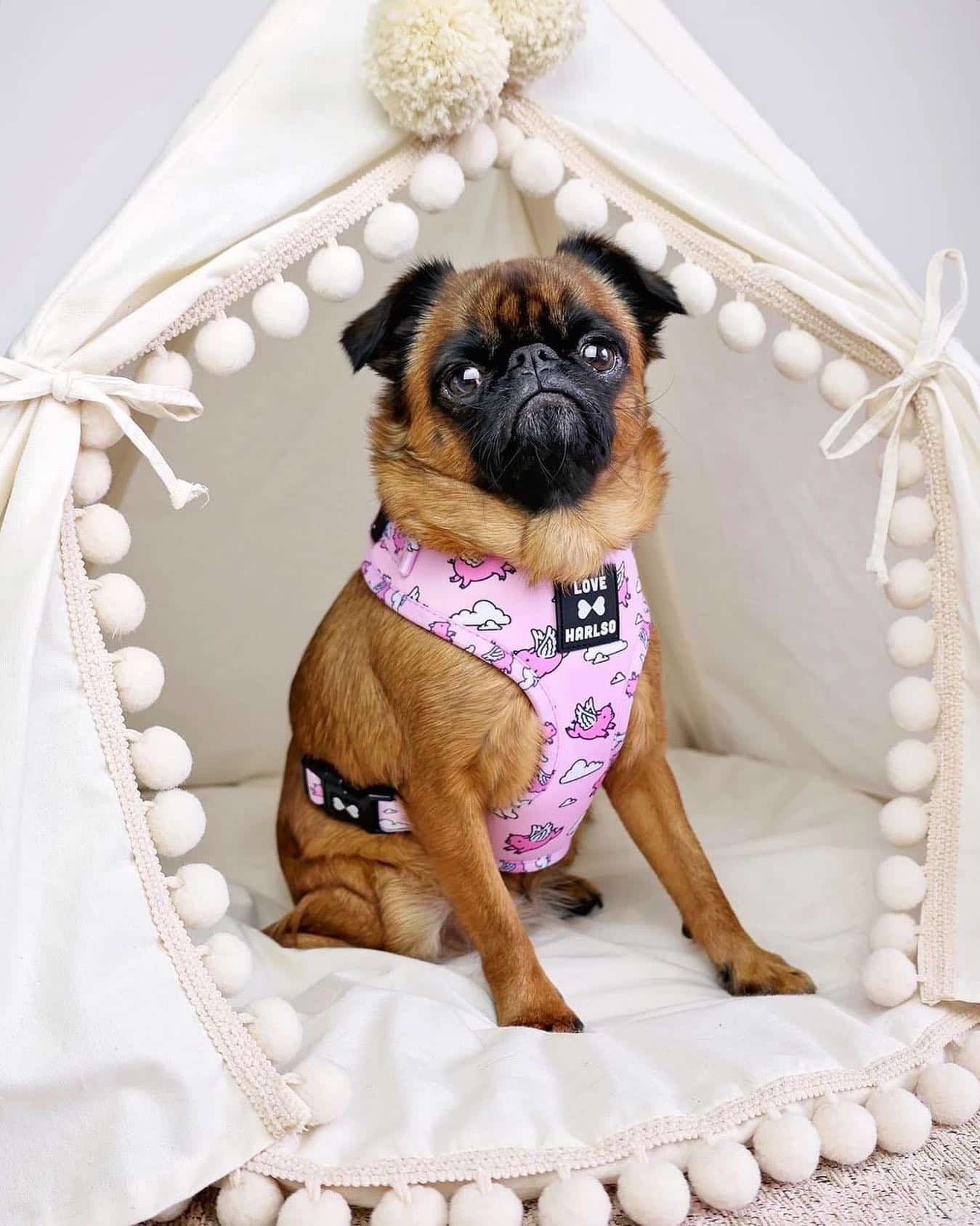
Pigs Might Fly on Brussels Griffon

Dog harnesses are becoming increasingly popular as they are a safer and more comfortable option for pet owners to control their furry friends while out for a walk or during outdoor activities. However, many pet owners may not know how to put on a dog harness correctly, which can lead to discomfort or even injury for their pets. In this article, we will discuss everything pet owners need to know about putting on a dog harness, including the different types of harnesses available, how to measure your dog for the right fit, and step-by-step instructions for putting on a dog harness.

Types of Dog Harnesses

There are several types of dog harnesses available in the market, but the most common ones are:

1. Back-clip Harness: This type of harness has a D-ring located on the back of the harness, which is used to attach the leash. It is the most common type of harness and is suitable for small to medium-sized dogs.

2. Front-clip Harness: The front-clip harness is designed to prevent dogs from pulling on their leash during walks. It has a D-ring located on the front of the harness, which helps to keep the dog’s head up and discourages them from pulling.

3. Dual-clip Harness: This type of harness has D-rings located on both the front and back of the harness, giving pet owners more control over their dog’s movements.

Measuring Your Dog for the Right Fit

Before purchasing a dog harness, pet owners need to measure their dog’s chest and neck to ensure the right fit. To measure the chest, wrap a measuring tape around the widest part of the dog’s chest, just behind the front legs. To measure the neck, wrap the measuring tape around the base of the dog’s neck, where the collar would usually sit. Once you have these measurements, you can use them to determine the correct size of harness to purchase.

Putting on a Dog Harness

Once you have purchased the right harness size, you need to put it on your dog correctly. Follow these steps for a stress-free experience:

Step 1: Loosen the straps on the harness to create a larger opening for your dog’s head.

Step 2: Place the harness over your dog’s head so that the D-ring is located on the back or front of the harness, depending on the type of harness you are using.

Step 3: Position the harness so that it sits comfortably around your dog’s chest, and adjust the straps to fit snugly. The harness should not be too tight as it can restrict your dog’s movement, but it should not be too loose as it can slip off.

Step 4: Attach the leash to the D-ring on the harness, making sure that it is securely fastened.

Step 5: Check that the harness is fitted correctly and is not causing any discomfort or chafing. If your dog seems uncomfortable, adjust the straps accordingly.

Final Thoughts

Putting on a dog harness is a straightforward process, but it is essential to get the right size and fit to ensure your dog’s comfort and safety. Pet owners should also consider the type of harness they are using, depending on their dog’s size, age, and activity level. With the right harness and proper fitting, pet owners can enjoy a comfortable and enjoyable walk with their furry friend.

Find the right dog harness for your furry friend with the help of Love Harlso. We are a dog accessory brand that aims to provide fun, stylish and comfortable dog accessories at affordable prices. Our adjustable dog harness range makes it easier to find the perfect fit. Shop now!

Posted on Leave a comment

7 Tips for Selecting a Harness for Your Senior Dog

Its A Dogs World on Spaniel

As dogs age, they may experience various health issues, including joint pain and mobility problems. A harness can be a great tool to help senior dogs navigate their surroundings and maintain their independence. However, not all harnesses are created equal, and choosing the right one for your furry friend is essential. 

Here are the tips for selecting a harness for your senior dog.

1. Consider the Type of Harness

Several types of harnesses are available, including front-clip, back-clip, and no-pull harnesses. Front-clip saddles are designed to discourage pulling by redirecting your dog’s attention towards you when they attempt to pull ahead. Back-clip harnesses are great for dogs who don’t pull and need more freedom of movement. No-pull harnesses are designed to gently discourage pulling by applying pressure to your dog’s chest when they attempt to remove.

2. Look for Comfortable Padding

An uncomfortable dog harness that rubs against your dog’s skin can cause irritation or even injury. Look for a soft, breathable padding harness that won’t rub your dog’s skin raw. A harness with wide straps will distribute pressure more evenly, reducing the risk of discomfort or injury.

3. Check the Fit

A harness that doesn’t fit properly can be uncomfortable for your dog and may even be dangerous. The harness must fit snugly but not be too tight, and there should be enough room for you to do two fingers between the harness and your dog’s skin. Ensure the harness is adjusted correctly before each use, as your dog’s weight and shape may change over time.

4. Consider Mobility

For senior dogs with mobility issues, a harness with a handle can be a lifesaver. The handle allows you to help your dog up stairs or over obstacles, giving them more independence and reducing the risk of injury. Look for a dog harness with a sturdy, comfortable handle that won’t dig into your hands.

5. Think About Visibility

If you like to take your dog for walks at night or in low-light situations, a harness with reflective material can help keep your dog safe and visible. Look for a harness with reflective strips or patches to catch the light and make your dog more visible to drivers and pedestrians.

6. Choose Quality Materials

A harness made from high-quality materials will be more durable and last longer than a cheaper, lower-quality option. Look for a harness made from sturdy, breathable fabrics that withstand wear and tear. A good-quality harness may cost more upfront, but it will keep your money in the long run by lasting longer and reducing the risk of injury.

7. Consider Your Dog’s Specific Needs

Finally, when selecting a harness for your senior dog, consider their needs and health issues. For example, if your dog has arthritis in their hips or shoulders, a harness that puts pressure on those areas may be uncomfortable. Look for a harness that provides support where your dog needs it most, such as a padded chest plate or a harness with a front-clip design that places less pressure on the back legs.

Conclusion

Selecting the proper harness for your senior dog can make all the difference in their comfort, mobility, and independence. By considering the type of harness, comfort, fit, mobility, visibility, quality materials, and your dog’s specific needs, you can find the perfect harness to help your furry friend live their best life.

Love Harlso’s fun and stylish dog harnesses and accessories are a must-have for any pet parent who wants to keep their furry friend looking and feeling great. With our adjustable dog harness range, finding the perfect fit has never been easier. Our products are made from high-quality materials, ensuring durability and comfort for your pet. Love Harlso has something to suit every style and personality, from classic designs to our trendy patterns. Browse our dog harness collection today and see the difference for yourself!

Posted on Leave a comment

Small Dog Harness Buying Guide: 4 Types to Consider

Starstruck on French Bulldog

A small dog harness can make a world of difference when walking your furry friend. Not only does it provide better control and prevent your dog from pulling, but it also helps to distribute pressure evenly across the body, reducing strain on the neck and spine.

With so many options available on the market, it can be overwhelming to choose the right one for your small dog. This buying guide will help you navigate through the different types of harnesses available and make an informed decision for your little companion.

1. Front Clip Harness

A front clip harness, also known as a no-pull harness, features a D-ring attachment point on the chest area. This design allows you to maintain better control over your dog’s movements, as any pulling will result in your dog being turned towards you, discouraging the pulling behaviour. This type of harness benefits dogs that tend to pull on the leash or need additional training.

Pros:

  • Provides better control for dogs that pull
  • Discourages pulling behaviour
  • Reduces strain on the neck and spine

Cons:

  • May not be suitable for dogs with short or flat noses, as the strap can sometimes rub against the face
  • Dogs can still pull if they are determined, though with less force

2. Back Clip Harness

A back clip harness features a D-ring attachment point on the back, between the shoulder blades. This type of harness is often more comfortable for dogs, as it doesn’t put any pressure on their neck. However, if your dog tends to pull, a back clip harness may provide a different level of control than a front clip harness.

Pros:

  • More comfortable for dogs, with no pressure on the neck
  • Easier to put on and take off
  • Suitable for dogs with short or flat noses

Cons:

  • Less control for dogs that pull
  • May not be ideal for dogs that need additional training or guidance on walks

3. Halter Harness

A halter harness, or headcollar, fits around your dog’s head and muzzle, with the leash attachment point typically located under the chin. This allows you to have more control over your dog’s head, making it easier to guide them in the direction you want them to go. This type of harness is particularly useful for dogs that are prone to pulling or lunging.

Pros:

  • Provides excellent control over your dog’s head and direction
  • Discourages pulling and lunging behaviours
  • Reduces strain on the neck and spine

Cons:

  • Can be uncomfortable for some dogs, especially those with short or flat noses
  • May require additional training for your dog to become comfortable wearing it

4. Dual Clip Harness

A dual clip harness offers the best of both worlds, with D-ring attachment points on both the chest and the back. This allows you to switch between a front and back clip depending on your dog’s needs and behaviour.

If your dog is prone to pulling or needs extra guidance, you can use the front clip. If your dog is well-behaved and doesn’t pull, you can use the back clip for added comfort.

Pros:

  • Versatility to switch between front and back clips
  • Provides control and discourages pulling when using the front clip
  • Comfortable for dogs when using the back clip

Cons:

  • May be more expensive than single-clip options
  • Not all dual clip harnesses are equally effective, so it’s crucial to choose a high-quality one

Final Thoughts

When choosing a small dog harness, it’s essential to consider your dog’s size, breed, and behaviour. Measure your dog accurately and consult sizing charts to ensure a proper fit. A well-fitting harness should be snug but not too tight, allowing two fingers to fit comfortably between the harness and your dog’s skin. By considering the different types of harnesses and their pros and cons, you can make the best decision.

If you are looking for cute dog collars and harnesses, shop at Love Harlso today. Our stylish collection comes with adjustable features that will make it much easier to find the perfect fit. Explore the best picks and place your order now!

Posted on Leave a comment

How to Find the Right Dog Collar Size for Your Pet

20220313 170334 rotated e1666211314839

When finding the right collar for your furry friend, size is key. A dog collar that is too loose can slip off, while a collar that is too tight can cause discomfort and even injury. So, how do you find the perfect fit for your dog’s collar? In this article, we’ll cover the basics of dog collar sizing, including measuring your dog’s neck, choosing the right width and material, and making adjustments as your dog grows.

Measuring Your Dog’s Neck

Before choosing a collar, you need to know your dog’s neck size. To measure your dog’s neck:

  1. Use a soft measuring tape or even a piece of string will do.
  2. Wrap the tape or string around the base of your dog’s neck, just below the collarbone.
  3. Make sure the tape or string is snug but not too tight, and take note of the measurement in inches.

If you’re using a string, mark the point where the string overlaps and then measure the length of the string with a ruler. This will give you an accurate measurement of your dog’s neck size.

Choosing the Right Width and Material

Once you have your dog’s neck measurement, you can look for collars that fit them properly. Collars come in an array of widths; the width you choose will depend on your dog’s size and breed. A general rule of thumb is to go with a collar at least 1 inch wide for larger breeds and 1/2 inch to 3/4 inch wide for smaller breeds.

In addition to width, you’ll also want to consider the collar’s material. Collars can be made from nylon, leather, or other materials, each with advantages and disadvantages. Nylon collars are affordable and easy to clean but may not be as durable as leather collars. Leather collars are more durable and stylish but can be pricier and require more maintenance.

Adjusting the Collar

Once you’ve chosen a collar that fits your dog’s neck size and is made from the right material, it’s time to adjust the collar to fit your dog’s neck properly. A too-loose collar can slip off, while a too-tight collar can cause discomfort and even injury.

To adjust the collar:

  1. Make sure it is sitting high on your dog’s neck, just below the jawline. You should be able to fit two of your fingers between the collar and your dog’s neck, but not more than that.
  2. If the collar is too loose, adjust it so that it fits snugly but is still not too tight.
  3. If the collar is too tight, loosen it until you can fit two fingers between the collar and your dog’s neck.

Making Adjustments as Your Dog Grows

As your dog grows and gains weight, their collar size may need to be adjusted. It’s essential to regularly check your dog’s collar for fit and make adjustments as needed. If your dog’s collar becomes too tight or loose, it can cause discomfort and injury.

In addition to adjusting the collar as your dog grows, you may also need to consider upgrading to a wider collar as your dog gets bigger. A wider collar will provide more support for your dog’s neck and will be more comfortable for them to wear.

Conclusion

Choosing the correct collar size for your dog is essential for their safety and comfort. By measuring your dog’s neck, selecting the correct width and material, and adjusting the collar for a proper fit, you can ensure that your furry friend is happy and healthy. And remember, always keep an eye on the dog collar for fit and make adjustments as needed.

Love Harlso offers a variety of fashionable and comfortable dog collars, harnesses, and other accessories. We have adjustable straps that make finding a good fit for your pet convenient. Check out our dog collars today!