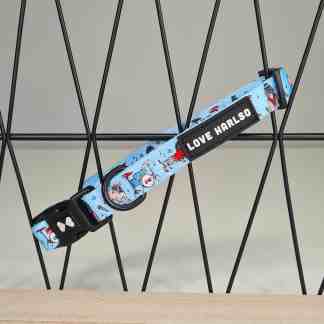

Posted on Leave a comment

6 Quick & Easy Tips to Harness Train Your Dog Correctly

Harnesses

Harness training your dog can make a significant difference in the overall walking experience, both for you and your pet. A properly harnessed dog is less likely to pull on the leash, which minimises the risk of injury and ensures a more enjoyable walk. Harness training can also help reduce anxiety and increase focus in your dog, making it an essential aspect of their training.

In this article, we’ll discuss six quick and easy tips that will help harness-train your dog correctly.

1. Start Training at Home

Before venturing outside, begin harness training in a familiar environment like your home. This will help your dog feel more comfortable and relaxed, making it easier to focus on the new skill. 

Start by introducing the harness to your dog, allowing them to sniff and investigate it. Then, gently put the harness on your dog, ensuring it fits correctly and comfortably. Practice walking around your home with your dog on the harness, offering treats and praise for a job well done.

2. Have Your Pet’s Favorite Treats Ready

Positive reinforcement is crucial when harness training your dog. Be sure to have their favourite treats on hand to reward them for good behaviour. This will help your dog associate the harness with something positive, making them more likely to accept it willingly.

As you progress with training, gradually reduce the number of treats you give, replacing them with verbal praise and affection.

3. Purchase a Front-Clip Harness

There are many different types of harnesses available on the market, but a front-clip harness is best for training purposes. A front-clip harness attaches to the leash at the dog’s chest, which gives you more control and discourages pulling. This type of harness also allows for better communication between you and your dog, making it easier to guide them in the correct direction.

4. Train Your Dog about Staying Focused

One of the most significant challenges when harness training your dog is keeping them focused on the task at hand. To help with this, practice short training sessions throughout the day, gradually increasing the duration as your dog gets more comfortable with the harness.

Use a consistent command, like “watch me” or “look,” to encourage your dog to maintain eye contact with you. Reward them with treats and praise for staying focused and following your cues.

5. Make Sure Food and Water Are Available

Keeping your dog well-fed and hydrated is essential during any training session. Ensure access to fresh water, and consider offering small treats or kibble to keep your dog motivated and engaged. This will help prevent your dog from becoming distracted by hunger or thirst and will make the training process more manageable for both of you.

6. Remember That Practice Makes Perfect

Patience is key when harness training your dog. It may take some time for your dog to adjust to the new equipment, so be prepared to practice consistently and with patience. Remember that each dog is unique and will learn at their own pace. Celebrate small victories and progress, and keep going if your dog takes longer to adjust than you initially anticipated.

Final Thoughts

Harness training your dog can significantly improve your walking experience and strengthen the bond between you and your pet. By following these six quick and easy tips, you can successfully harness-train your dog and enjoy more pleasant walks together. Remember, patience and consistency are key, so keep practising and supporting your dog throughout the process.

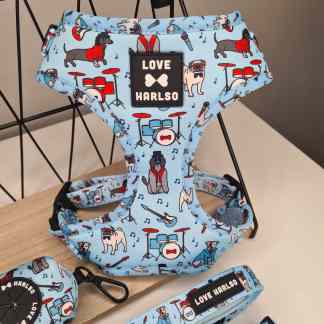
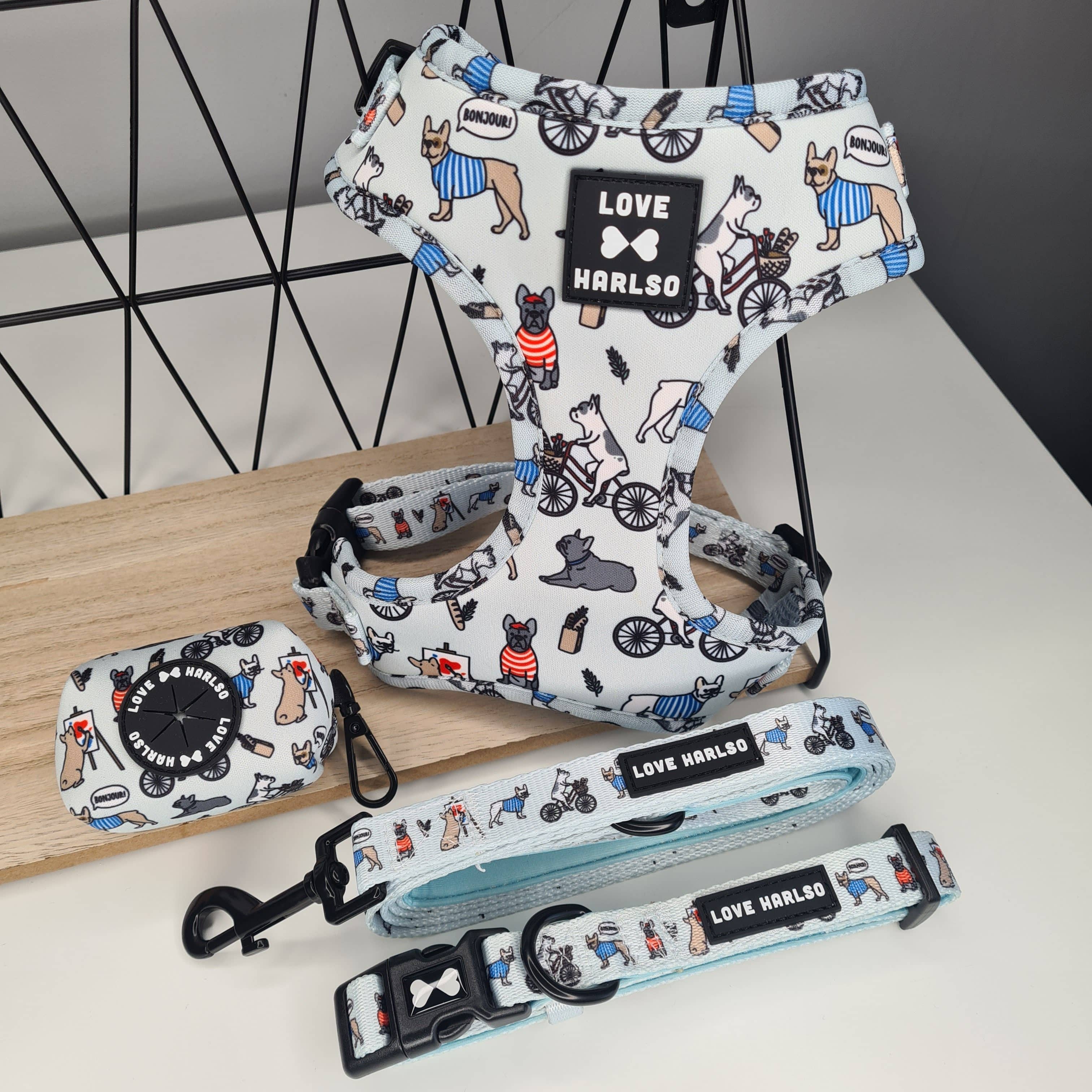
Are you looking for the best adjustable harness for dogs? Love Harlso is a perfect choice. Explore our fun and stylish designs, and place your order today!
Posted on Leave a comment

Harness for Dogs: How to Know If It Fits Properly

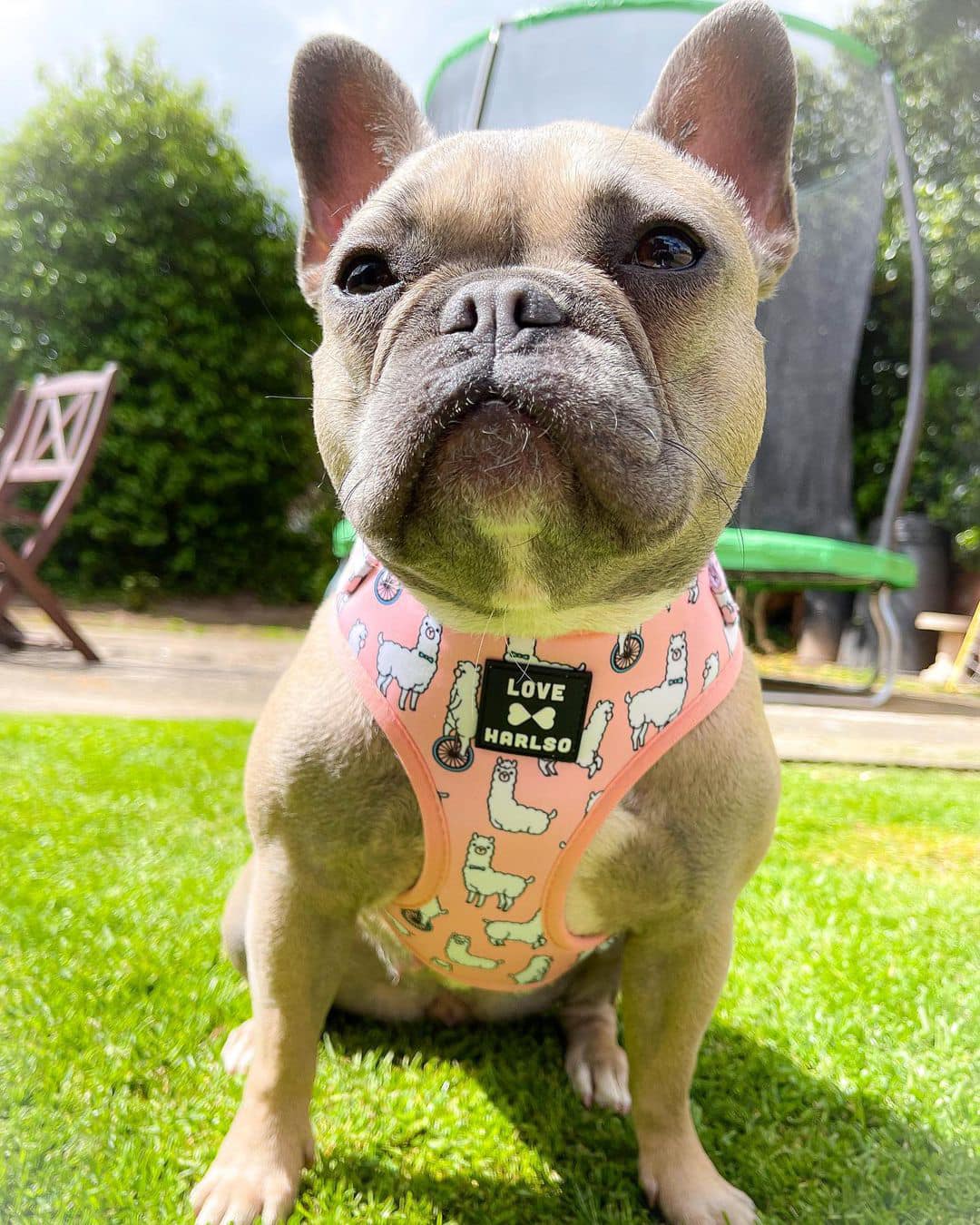
Ooh La Llama on French Bulldog

A harness that fits your dog correctly is essential for comfort and safety. If the dog harness is too loose, your dog may be able to slip out of it, or it may become tangled, while a harness that is too tight can be uncomfortable or even dangerous. 

Therefore, ensuring that the harness you choose fits your dog properly is important. This article will discuss how to determine if your dog’s harness fits correctly. Here, find tips on measuring your dog, putting on the harness correctly, and checking for a proper fit.

How to Determine the Proper Fit of Dog Harness

  • Go to the supplier’s or manufacturer’s size chart to determine where your dimensions sit on the scale. Adjust the harness to the smallest setting if they are approaching near to the smallest size. Adjust the straps and other accessories to the highest setting if it is on the larger side. This is a fantastic place to start as you compare your dog’s measurements to those provided by the supplier.
  • If you can’t, adjust it and loosen the strap till you can.
  • Get the assistance of a buddy to gracefully stand up as you hold your dog in a natural, upright, standing position.
  • Check to see if the fit of the accessories harness in the main body parts restricts the chest, neck, torso, or back. If it is, make a minor adjustment. Adjust the fit if it is too loose so the skin is not pinched.
  • Take your dog on a stroll and reward it with snacks. If this is your first test walk wearing a harness, you want things to go well. The rein is probably not excessively tight or rubbing any temperate regions if the dog moves quite well and shows no signs of suffering.
  • Examine any spots where straps, padding, or other limitations are close to your dog’s legs while it is facing you. One belt, for instance, ties to a few harnesses directly behind the dog’s front legs. Ensure the strap is not cutting into the dog’s leg pit when walking and not facing forward. Only minimal space is needed between the leg and the waistband when the dog stands. This must be standing straight up or turned away from the legs.
  • Make sure the straps on the adjustable harness for dogs are the proper tension—not too tight or loose. According to the basic rule of thumb, one finger should feel a small pinch if you place it under the strap. The strap is likely a little loose if there is barely any pressure. It can be overly tight if your finger feels like it is under a lot of stress.
  • Put your dog on a standard or double-ended leash, take it on a walk, and reward it with a treat for being a good walking partner. Right now, go outdoors and notice if your dog feels at ease. Allow your dog to explore and go where its instincts take it.
  • Check the harness’s motion. The saddle shouldn’t move about much or be very loose in any one place because it is made to proceed with your dog rather than by itself. It should be noted that there could occasionally need to be a compromise around the neck if the harness can be placed on and taken off more efficiently with a slightly looser fit.

Additional Tips 

If your dog is unusually large or small in a particular area, be sure you can adapt the harness to fit your dog comfortably in these areas and that doing so does not adversely affect other areas or adjustment points (the neck or chest).

Observing your dog’s gait when you take him for his first walk is essential. Before attempting to change it, check for any clear causes for this if it shows no interest in smelling, exploring, or otherwise appearing comfortable. Take caution because some dogs may act reluctant to move to attract attention.

Conclusion 

It is important to ensure that your dog’s harness is fitted correctly as it can prevent injury, improve comfort and ensure your dog is safe and secure. The best way to ensure that a dog harness fits correctly is to measure your dog for the correct size, providing enough room to move and breathe comfortably but not too much so that the harness slips off. Additionally, when putting the harness on, ensure it is snug but not tight, and check that all buckles, straps, and clips are secure. Your dog will be comfortable and safe with the right size and fit. 

Dog harnesses and accessories from Love Harlso that are fashionable and fun. Our adjustable harness for dogs makes finding the ideal fit simpler. Buy now!

Posted on Leave a comment

Do Dogs Have to Wear Harnesses All the Time?

Galactic Woofers on Lab

Dogs are truly amazing creatures. Not only are they loyal and loving companions, but they also bring joy and happiness to our lives. From going on long walks in the park to snuggling up on the couch, there are countless ways that our canine friends enrich our lives.

When walking your dog, having the right equipment is essential. One of the most prominent tools you can have is a dog harness. Harnesses are a great way to keep your pup safe while out and about. But do dogs always have to wear them?

In this article, we’ll explore the benefits of harnesses, the risks of wearing them every day, and how long dogs can wear them.

Why Do Dogs Need to Wear Harnesses?

Harnesses have become increasingly popular in recent years due to their many benefits for pet owners and their furry friends. For starters, harnesses give owners more control over their pets, making it easier to handle them during walks, especially for larger breeds. After all, pet owners must teach their dogs proper leash etiquette, and a harness can simplify this process. 

Additionally, dog harnesses are more comfortable for pets than collars, as they do not put pressure on the neck or throat, which can cause choking or breathing difficulties. This is especially important for small dogs, as they are more prone to neck and spinal injuries.

Lastly, harnesses are an essential safety tool for dogs. They can prevent your pup from running off and getting lost, help you have better control when walking, and even protect them in the event of an unexpected jolt. Moreover, these tools make it easier to transport dogs in cars, as they can be safely secured with a seatbelt.

Risks of Your Dog Wearing a Harness Everyday

Wearing a harness for your furry friend can be a great way to keep them safe and secure while out and about. Whether taking your pup for a walk or running errands, a harness offers more control than just a collar and leash. However, wearing a harness regularly can come with some risks.

The most common risk associated with wearing a harness is chafing. As your pup moves and runs, the harness straps can rub against its skin, causing discomfort and irritation.

Another risk of wearing a harness is that it can cause your pup to become overly dependent on the device. If your pup constantly wears the harness, they may become accustomed to relying on it and want to avoid wearing a plain collar or leash. This can lead to a decrease in confidence and independence and even lead to behaviour issues. 

How Long Must Dogs Wear Their Harnesses?

This will depend on the activity the pup is participating in and the type of harness they are wearing. Generally, a harness should be worn for at most 2 hours. If your pup is going on a long walk or hike, it is important to take frequent breaks to allow them to rest and move around. 

Final Thoughts

Harnesses are essential tools for dog owners, providing numerous benefits for pets and their owners. However, wearing a dog harness daily can have risks, including chafing and behavioural issues. 

As a responsible pet owner, always practise proper harness wear to ensure the safety and comfort of your furry friend. This way, you can enjoy the many benefits of using a harness while avoiding potential risks.

Love Harlso provides a wide selection of dog harnesses and other pet accessories. Our products are designed with your pup’s comfort and safety in mind. Shop from us today to find the perfect harness for your pup!

Posted on 1 Comment

What Should You Know Before Getting a Dog Harness – A Guide

img 8182

Choosing a dog harness is an important decision for any pet owner. Harnesses come in a variety of styles, materials, and sizes, and selecting the right one for your dog can make all the difference in terms of safety, comfort, and convenience.

In this guide, we will provide an overview of the different types of harnesses and their features when selecting one for your pet.

What is a Dog Harness? 

A dog harness is a type of device used to attach a leash to a dog. It is designed to provide more control and prevent choking or injury to the pet’s neck and back. Harnesses come in many types, from basic models to more elaborate ones with extra features. 

Harnesses can be beneficial for training and controlling your dog. They help provide better control over your dog and make it easier to train them. Harnesses also provide comfort to your dog as they spread the pressure away from the neck and across the chest.

What to Consider Before Buying Dog Harnesses

1) Size and Weight

It is important to get a harness that fits your dog properly and comfortably, as an ill-fitting harness can cause discomfort and can even lead to injury. The size of the harness should be appropriate for the size and weight of the dog. 

Smaller dogs may need an extra-small harness, while larger breeds might require an extra-large. The weight of the harness should also be taken into account, as heavier harnesses can cause strain on the dog’s body.

You can check out size guide for instructions on how to choose the right size of harness for your dog. Alternatively you can reach out to us directly via our contact form or DM on social media.

2) Type of Harness

A type of harness to consider before buying is one that is specific to the breed of dog you have. Different breeds have different shapes, sizes, and activity levels, so you’ll want to find a harness that fits the needs of your pup. 

Some harnesses are designed for comfort and security, while others are designed for more active dogs. Additionally, some harnesses are designed to be used with a leash and others are intended for hands-free control. Choosing the right type of harness is essential to make sure your pup is safe and comfortable.

At Love Harlso, we have a range of adjustable dog harnesses, these are the perfect harness for most dogs. They are comfortable, stylish and safe.

3) How You Walk Your Dog

Walking your dog can be an enjoyable experience for both you and your pup. When using a harness, it is important to ensure that it fits properly, is comfortable for your dog, and provides you with enough control.

Conclusion

The right harness can be an invaluable tool for helping you and your pup have a great time out and about. When choosing a harness, it is important to consider factors such as size, comfort and durability. 

Love Harlso has a collection of dog harnesses perfect for every kind of pup. We sell cute dog collars and accessories that are both fashionable and functional! Take a look at our wide selection to find one for your furry friend. 

Posted on Leave a comment

Dog Harness vs Collar: Pros, Cons and Things to Consider

20220327 131825 rotated

Are you looking to buy a pet accessory for your furry friend? While it’s easy to say that you may want some cute dog collars and accessories for your furry friend, the reality is choosing between a collar and harness can be a tough decision. So, let’s break down their pros and cons and discuss some things to consider before making a purchase.

Pros of a Dog Harness

One of the biggest advantages of using a dog harness is the added control it offers. A harness provides more control than a collar, which puts less pressure on the dog’s neck. This is especially helpful for strong pullers. A harness can help you easily guide them and prevent them from going off in different directions. Harnesses also do not put stress on your dog’s throat, which is important for their comfort and safety.

An adjustable harness for dogs is also usually more comfortable for your pet to wear. They are designed to be worn over the chest area, which provides more comfort than a collar which can be less comfortable.

Finally, harnesses can make it faster and easier to control your dog in public or for training purposes.

Pros of a Dog Collar

Dog collars are the most common type of accessory. Most collars are adjustable, making them the most customisable option for your pet. This makes it easy to adjust the fit as your dog grows.

Collars for many are easier to put on your dog. At Love Harlso our collars come in a variety of colours and patterns, allowing you to have more fun with your pet’s appearance.

Additionally, collars are generally less expensive than harnesses. If you are on a tight budget, a collar can be a good option to consider.

Cons of a Dog Harness

One of the biggest drawbacks to a dog harness is that it can be difficult to put on. If you have an uncooperative dog, getting the harness around their chest can be challenging.

Harnesses can also be more expensive than collars. This is because they are usually made from more durable materials and come with more features like padding.

Cons of a Dog Collar

The main downside to using a collar is that they can place too much pressure on the dog’s throat. This can cause discomfort and possible health problems if it is too tight.

Collars also do not provide as much control as harnesses. This makes it harder to control your pet when they are in a public area.

Finally, collars can also be less comfortable than harnesses as they can cause unwanted rubbing and irritation on your pet’s skin. ITs important that you get the right size and that the collar is not too tight. You can use our handy size guide for support to get the correct size.

Things to Consider When Choosing Between a Harness or Collar

When deciding between a collar and a harness, it’s important to consider the size and breed of your pup. Smaller breeds and those with short necks may be more comfortable in a harness, while larger breeds may be better suited for a collar. Additionally, a harness may be a better option if your pup is prone to pulling or lunging.

No matter which option you choose, make sure to take your pup on some test walks to make sure they’re comfortable with it. It’s also important to measure your pup’s neck (or girth, for harnesses) before buying to ensure they have the proper fit.

Conclusion

Choosing between a dog harness and collar is an important decision. There are pros and cons to both types of accessories, so you need to consider your pet’s size, activity level, and budget when making a decision. In the end, it’s up to you to decide which option is best for your pup. If you’re still unsure, you can discuss with your vet on what they would recommend.

If you’re looking for a functional and stylish dog harness for your canine companion, Love Harlso has everything you need. We are your best source for cute dog collars and harnesses, as well as other accessories, to make sure your pup is always looking their best. Shop our selection today and find the perfect adjustable harness or collar for your pup.