
Posted on Leave a comment

Why You Should Get an Adjustable Harness for Your Dog

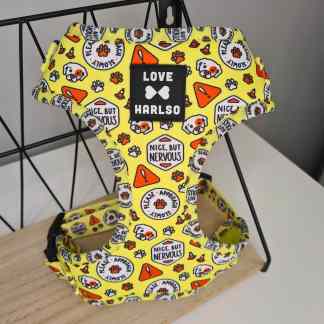
Nice But Nervous Harness

Dogs are beloved by their owners and deserve the best possible care and comfort. An adjustable harness for dogs can provide a range of benefits, from providing better control and security to allowing for a more comfortable fit. Let’s explore the other benefits of an adjustable harness: 

Gives You More Control

An adjustable harness can give you more control over your pup. This is especially important when you’re out walking, running, or hiking with your dog. The adjustable straps allow you to keep your pup close and secure.

Prevents Pulling

An adjustable harness can help prevent your pup from pulling on the leash. The straps are adjustable, so you can make sure the harness fits your pup snugly and securely. This prevents your pup from slipping out of the harness and reduces the amount of pulling they can do.

Provides Comfort

An adjustable harness can give your pup a comfortable fit that won’t chafe or rub. The straps are adjustable, so you can ensure the harness fits your pup snugly and securely. This allows your pup to move around comfortably without feeling restricted.

Reduces Stress

An adjustable harness can also help reduce stress. The straps are adjustable, so you can ensure the harness fits your pup snugly and securely. This prevents your pup from feeling confined and can help them stay calm and relaxed while out and about.

Prevents Escape

An adjustable harness can also help reduce stress. The straps are adjustable, so you can ensure the harness fits your pup snugly and securely. This prevents your pup from feeling confined and can help them stay calm and relaxed while out and about.

Allows for Easy Training

An adjustable harness can also make training your pup much easier. The straps are adjustable, so you can ensure the harness fits your pup snugly and securely. This makes it easier for you to give your pup commands and corrections and for your pup to respond to them.

Prevents Injuries

A properly fitting harness can also help prevent injuries. If the harness is too loose, your pup may be able to wiggle out of it, which can lead to them running away or getting into trouble. A properly fitting harness can also help prevent your pup from pulling too hard on the leash, which can lead to neck or back injuries.

Prevent Ocular Proptosis

An adjustable harness can help prevent ocular proptosis, when the eyeball pops out of its socket. This can happen if your pup pulls too hard on its collar or if its collar is too tight. An adjustable harness can help prevent this by providing a snug fit that won’t put too much pressure on the eyeball.

The Bottomline

An adjustable harness for your dog is an excellent way to get them comfortable and secure when out for a walk. It provides extra control and a greater sense of security for both you and your pet. 

With a harness, you can also adjust it to fit your pet’s size, making it a great option for growing puppies and larger dogs alike. Overall, an adjustable harness is an excellent choice for any pet parent looking to provide their furry companion with a safe, secure and comfortable way to explore the world.

Are you looking for an adjustable harness? Love Harlso offers fun and stylish dog harnesses and accessories. Shop now!

Posted on Leave a comment

What You Must Know About the Types of Dog Poop Bags

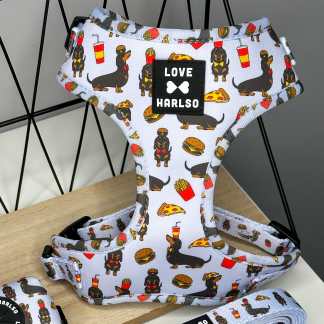
Dachshunds wearing harness

Pooping is a natural part of owning a dog, and it’s important to clean up after them. You should always have the supplies to pick up after your pet and be prepared to do so whenever they go. It’s a responsible and necessary part of taking care of a dog. 

Navigating the variety of dog poop bags can be overwhelming. Different types come with various labels, so how can you decide which one is the best option for you and your pup? Keep reading to find out.

Types of Dog Poop Bags

1. Biodegradable

Biodegradable dog waste bags are becoming more popular and are usually made from substances that decompose quicker than non-biodegradable poop bags; biodegradable essentially means that these bags are broken down through natural methods. Even though biodegradable dog poop bags may seem like a good choice for the environment, it is not always the case, so be wary.

2. Compostable

If you want to make a more eco-friendly choice, consider getting compostable dog poop bags. These bags are usually made from corn starch or similarly derived products and can be put into a compost pile. This compost can then be used in your garden, creating a natural mulch.

Collecting and composting your dog’s poop is a great way to help the environment. You should separate the compost that contains dog poop from any compost that will be used for growing food for humans. It is essential to take extra care when composting your dog’s poop.

3. Non-Recyclable 

Dog waste bags made from single-use plastics significantly contribute to environmental issues and the climate crisis. Although economical and provide a sturdy feel, these bags are not eco-friendly and are not biodegradable in a timeframe that is beneficial to the environment. It is recommended to make the switch to more eco-friendly alternatives in order to help reduce the amount of plastic waste and its adverse effects on the planet.

4. Recycled

If you don’t have the option of composting but still want to help the environment, you can use recycled dog poop bags. These are made of recycled plastic, which means you aren’t introducing any new plastic into the environment. It’s a small step, but it can still make a difference.

Closing Thoughts 

The use of dog poop bags is an essential part of pet ownership. Dog poop bags are designed to make it easy to clean up after your pet. They help keep the environment clean and safe for everyone and also keep our pets healthy by preventing the spread of disease. 

Dog poop bags are available in a variety of sizes and styles, making it easy to find the ideal bag for your pet. They are affordable and easy to use, making them an essential part of responsible pet ownership. We hope that this article has shed some light on the subject of dog waste bags. 

No matter how you take care of your dog’s poop, it is vital that you do. If you don’t clean up after your dog, you could be fined, and it can also cause health risks. Dog poop can spread diseases, so it’s crucial that you do your part to keep everyone safe.

For top-quality poo bags, check out Love Harlso. We offer stylish dog harnesses and accessories. Contact us!

Posted on Leave a comment

A Fur Parent’s Guide to Putting a Harness on a Puppy

Its a Dogs World on Chihuahua

Being a fur parent is a great responsibility. It requires one to be patient, caring and understanding. Part of being a responsible fur parent is ensuring your puppy is safe and secure.

One of the best ways to protect your puppy is by using a harness. Harnesses are great for controlling the movements of the puppy, and they also prevent injury and keep the pup safe in dangerous situations.

In this guide, we will provide fur parents with the information they need to fit and harness their puppy correctly. 

What Are the Benefits of Harness Training on a Puppy?

Harness training provides many benefits to both you and your pup and can help ensure a healthy and happy relationship. Here are some of the top benefits of harness training on a puppy.

1. Control: A harness can help you maintain control over your pup and prevent them from running off or escaping. This is especially important if you have a high-energy pup or one that tends to be easily distracted.

2. Safety: Harnesses provide extra protection for your pup, especially when they are off-leash. If your pup is in a harness, it is much easier to keep track of them and make sure they are not in danger.

3. Comfort: Harnesses can be more comfortable for your pup than a collar. This is especially true for smaller pups or those with short hair. The harness also helps to distribute the weight of your pup’s leash evenly, which can reduce strain on their neck and back.

4. Training: Harness training is an effective way to teach your pup basic obedience commands such as sit, stay, and come. The harness helps to provide a connection between you and your pup and can help them understand what you expect of them.

5. Bonding: Harness training is also a great way to bond with your pup. The process of putting the harness on and taking it off can be a great opportunity for you and your pup to bond and have some quality time together.

When Should a Puppy Begin Harness Training?

When it comes to harness training, the earlier you start, the better. Puppies are naturally curious and eager to learn, so it’s best to introduce them to the harness as soon as possible. Generally, puppies should begin harness training at around 8-10 weeks. At this age, your pup should be able to wear a harness for short periods of time comfortably.

When introducing your pup to the harness, it’s important to make sure that the fit is correct. A harness that is too tight can be uncomfortable for your pup and can cause chafing or rubbing. A harness that is too loose can also be a problem, as it can be a choking hazard. The best way to ensure that the harness fits correctly is to have it professionally fitted by a pet store or vet.

Once your pup is comfortable wearing the harness, you can begin the actual training process. Start by having your pup wear the harness around the house and getting them used to the sensation of wearing the harness. You can then progress to taking your pup outside on walks and teaching them basic commands like “heel” and “sit”.

What Style of Harness Should a Puppy Wear?

There are several different styles of harnesses available, and it’s important to choose one that is comfortable and secure.

A front-clip harness is a popular option for puppies, as it allows you to easily control your pup while walking. This type of harness attaches to your pup’s chest and wraps around the neck. This style of harness is also beneficial for puppies who are still learning to walk on a leash, as it can help to discourage pulling. 

Another style of harness that is popular for puppies is a step-in harness. This style of harness has a loop that your pup steps into, which then buckles around the chest. This type of harness is easier to put on and take off and offers more control than a front-clip harness. 

Final Thoughts

Harness training is an important part of teaching your pup to be a well-behaved and obedient companion. Starting early is key to ensuring that your pup has a positive experience with the harness and is able to learn quickly and easily.

If you’re ready to start harness training, shop at Love Harlso. We offer cute dog collars and harnesses that you and your pup will surely love. Explore our collection and place an order today!

Posted on Leave a comment

A Must: Use a Dog Harness When Walking Your Dog

277BE5BC 0EEF 4AF9 AA50 123A2F374409


When dogs exercise, they enjoy it and play freely. Exercise is essential for your dog’s physical and mental health, whether you walk him outside or inside. Even if you simply take your dog for
a short stroll outside, safety should always come first.
There are many advantages to utilising a harness when walking your dog, including the ability to
prevent damage to the neck and spine. Below are notable reasons why you should use a
harness when walking your dog.


It’s for the Wellness of Their Neck and Spine
A lively dog will pull on the leash while out on walks. It will lead to their collar and neck being
pulled. If a dog pulls on the leash too forcefully, it could hurt its throat, neck, or spine.


It’s More Difficult to Flee
When wearing a collar, a dog might easily wriggle free and either flee into danger or become
lost. A dog with a properly fitted harness is more resistant to escaping since a harness is more
difficult to remove.
Unlike when they escape their collar, which only requires her to back out of it, if your dog tries to
escape their harness while you are out on a walk, you will be aware of it.


An Ageing Dog Can Stand with the Aid of a Harness
A harness will give you leverage to help raise an older dog to its feet or assist them up and
down stairs if they are finding it increasingly difficult to stand or negotiate stairs. Even harnesses
with handles are available for purchase if you have an elderly dog or a dog with movement
limitations.


Walking Is Simpler
A harness is the best choice when walking a dog on a leash and with a collar, especially when
they enjoy tugging and make the walk a “drag” for both of you. When your dog is wearing a
harness, the tension of his forward tugging on you and your arm is reduced.
When your dog is wearing a harness, you can train him to walk gently and more quickly.


It Ensures That Your Dog Does Not Pull on the Leash

A simple walk may seem like a great effort to an owner trying to manage the situation if their pet
dog constantly struggles with the leash that is fastened to its collar. With each tug on the collar,
the dog advances, dragging you along with it.
This merely serves to encourage the dog to keep pulling. You can stop the pet’s pulling
behaviour if you start using a harness on it. A dog cannot move ahead by pulling the leash that
is fastened to a harness.
The leash is attached to a hook on the dog’s back, between its shoulders, and prevents pulling
by guiding the dog’s forward motion in the opposite way.


Conclusion
Dogs that enjoy going for walks are generally happier dogs. The next time you take your dog on
a walk, consider getting him a harness to keep him secure and dog insurance coverage to
protect your finances and your dog’s wellbeing.
Find the perfect dog harness for your dog at Love Harlso! We offer fun and stylish dog
harnesses and accessories, and our adjustable dog harness range makes it easier to find the
perfect fit. Check out our catalogue today!

Posted on Leave a comment

Some Valuable Tips to Help You Put On Your Dog’s Harness

Its A Dogs World set

Dogs, like people, need regular exercise, and that means taking them for a walk every day. Wearing a harness is one method to improve the quality of those everyday walks. The type of leash-pulling that might choke or injure a dog’s neck is minimised when wearing a harness since the leash attaches to the harness between the shoulders or at the chest. A properly fitted harness is beneficial for all dogs, but it is especially useful for dogs that pull or have breathing problems while they work out.

Don’t let the multitude of buckles and straps put you off! After learning the ins and outs of dog harnesses, you and your canine companion will enjoy the benefits of this simple gear.

How to Determine Your Dog’s Harness Size

Identifying a suitable match is the first step. A quality harness will be easily adjusted to fit your dog’s size and shape.

You can expect to find sizes ranging from small to extra-large in harnesses. Knowing your dog’s weight and measurements will help you choose the right size. The majority of dog harnesses provide measurement recommendations to ensure a snug and secure fit.

You first need to take your dog’s girth measurement about 2 inches above the elbow. Then, take an under-the-chin measurement of your dog’s neck. Choose the appropriate harness size depending on the measurements and weight. Leave some wiggle areas for alterations.

Instructions for Fastening Various Dog Harnesses

Those who have shopped for dog harnesses before know there is a wide selection to choose from. The procedure for attaching a harness to your dog will change depending on the model you choose. The universal truth is that not all dog toys are created equal. A harness should be utilised as a part of a positive reinforcement training programme, just like any other new training tool.

One or two D-rings (for attaching a lead) and buckled straps allow you to customise the harness to your dog’s size and shape. Keep an eye out for the D-ring, as its placement will specify the harness.

1. The Step-In Harness

If you’re looking for a step-in-style harness, the D-ring will be in the rear. Your dog’s front paws will need to enter the harness before you can fasten the clasp on his back. This style is recommended for tiny dogs, pups, and quick trips (such as from the car to the vet) because of the padding in the chest area.

2. The Front-Clip Harness

Avoid “no pull” harnesses whenever possible; they can be painful for dogs and prevent them from walking in their natural way, despite being advertised as such. Colour-coded straps are a common feature on front-clip harnesses to facilitate proper sizing. The collar loop (the part that goes around the wearer’s neck) of most front-clip harnesses is a different colour than the body straps. Place the D-ring in front of the dog’s chest. Attach the straps beneath your dog’s belly once you’ve placed the chest clip on your dog’s chest.

3. The Back-Clip Harness

You will most likely use these if you go for a stroll or a trek. A dog with a sensitive neck or one that tends to pull when aroused may benefit from this, as may a young puppy learning to walk on a lead. There will be a D-ring on the back, in the space between your dog’s shoulders, for the back-clip style of harness.

The smaller loop goes over the dog’s head and rests like a collar, so that’s where you should begin when putting this on. After that, guide your dog through the remaining openings. Tweak the fit by adjusting the straps’ sliding closures.

4. The Dual-Ring Harness

Some manufacturers offer harnesses with front and rear D-rings. This category includes the Balance, which works well for most dogs and can be used in a variety of situations. This harness will limit your dog’s tendency to pull while still allowing for their complete range of motion in the shoulders and torso. Also, it’s highly adjustable, so it can accommodate a wide variety of dog sizes and coat thicknesses.

A colourful strap runs down the dog’s back, linking the two separate loops (one at the collar, one at the torso). The collar loop should go on first, followed by the body loop straps being buckled from behind.

Conclusion

Putting on a harness for your dog is not as difficult as it may seem. With the right tools and the right approach, it can be done quickly and safely. Following the tips mentioned in this article can help your pooch be comfortable and secure with the harness on.

If you are looking for a great source of high-quality dog harnesses in Northern Ireland, look no further than our selections here at Love Harlso. We offer a wide range of harnesses and dog accessories that are sure to provide your four-legged friends with the comfort and mobility that they need. Feel free to check out our ‘Dog Harnesses and Accessories’ section for more of our harness variants and their prices.