
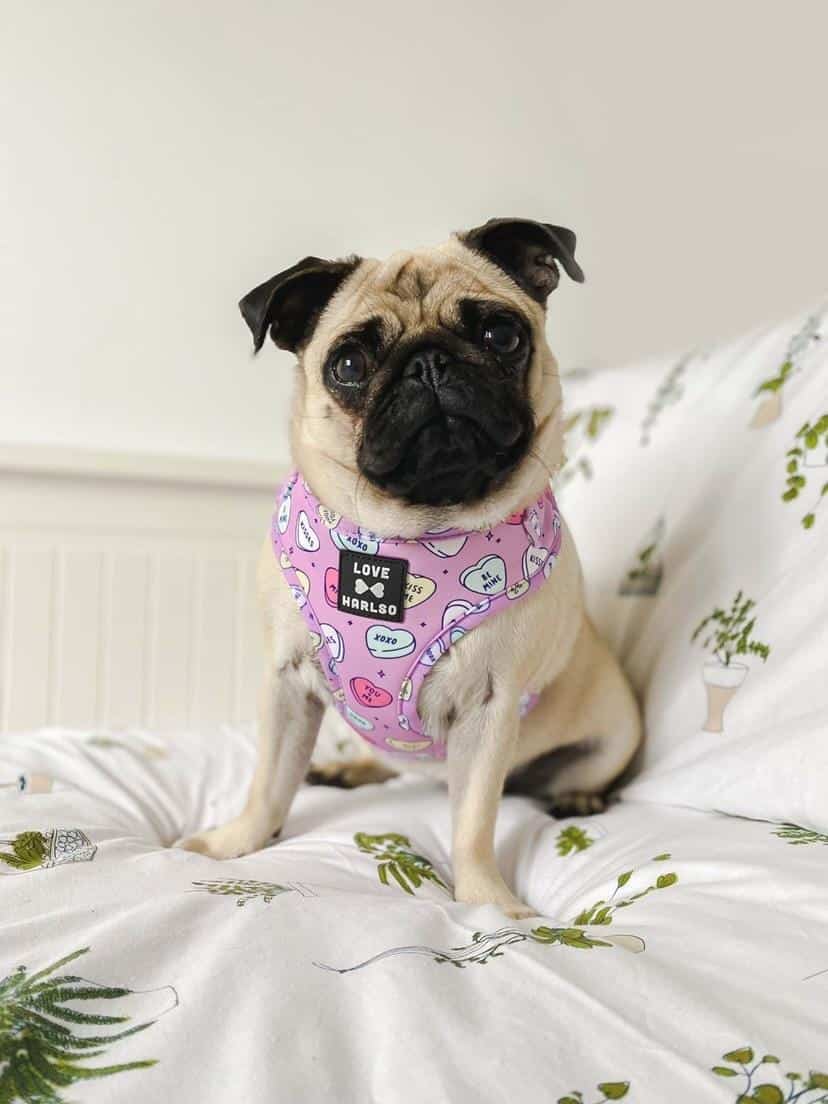
Pugs are flat-faced, wide-chested little dogs — and that shape makes the right harness especially important. A collar can press on a pug’s throat and make breathing harder, while a well-fitting harness spreads pressure across the chest and shoulders instead. This guide explains how to measure your pug, which harness types suit their broad chest and short legs, and how to choose a comfortable, durable Love Harlso harness — with a matching lead — that fits them perfectly.
Why a Harness and Not a Collar?
Harnesses are a great alternative to traditional collars for pugs. Collars can be uncomfortable and can even cause injury if they are too tight — and because pugs are flat-faced, pressure on the throat can worsen their breathing and increase the risk of tracheal collapse. Harnesses distribute the pressure of the lead more evenly across the chest and shoulders, reducing the risk of injury. In addition, harnesses provide more control when walking your pug, making them a better option for lead training.
How to Measure for a Harness
The first step in finding the perfect harness for your pug is to measure them for the right size. You’ll need to measure your pug’s chest circumference, neck circumference, and back length. You can do this by wrapping a tape measure around their chest, just behind the front legs, and around their neck. Then measure from the base of their neck to the base of their tail.
Types of Harnesses
Once you’ve measured your pug, you can start shopping for the right type of harness. There are several different types of harnesses available, including step-in, vest, and no-pull. Step-in harnesses are easy to put on and take off, while vest harnesses provide more coverage and control. No-pull harnesses are designed to discourage your pug from pulling on the leash. Depending on your pug’s size, activity level, and behaviour, you may want to consider a different type of harness.
Consider Comfort
In addition to finding the right type of harness, it’s important to make sure that the harness is comfortable for your pug. Look for harnesses that have adjustable straps and breathable materials to ensure that your pug is comfortable while wearing them. Additionally, make sure to choose a harness that is lightweight and won’t chafe your pug’s skin. At Love Harlso, our adjustable dog harness range is made from easy to wash neoprene which is super comfortable for your dog to wear.
Choose Durable Materials
When shopping for a harness for your pug, it’s important to choose one that is made from durable materials. Our harnesses are made so that they won’t stretch or tear easily. Make sure to check the stitching to ensure that it is strong and secure.
Choose the Right Color and Pattern
Finally, you’ll want to choose a harness that is both stylish and functional. Look for a harness that comes in colour and pattern that your pug will look great in. If you want to dress your pug up for special occasions, look for a harness with a sparkly or festive pattern.
Conclusion
Choosing the perfect harness for your pug is an important decision. It is important to consider the size, comfort, and durability of the harness to ensure your pug is safe and secure. Additionally, you should make sure to buy a harness that is made of high-quality materials and is easy to clean. With the right harness, you can make sure your pug is comfortable and secure in any situation. Ultimately, choosing the perfect harness for your pug is an important decision that should be made with care and consideration.
Frequently asked questions — Should a pug wear a collar or a harness? A harness is safer for pugs: it keeps pressure off the throat, protects their breathing, and gives you more control. What type of harness is best for a pug? A lightweight, well-padded step-in or vest harness with adjustable straps, made for a wide chest — avoid anything that presses on the neck. How do I measure my pug for a harness? Measure the chest just behind the front legs, the neck, and the back length, then check the Love Harlso sizing guide and adjust the straps so two fingers fit between harness and fur. If you are looking for an adjustable harness for your pug, come to Love Harlso — browse the harness range and matching leads and let us help you find the perfect fit for your furry friend today!
-
Product on sale
 Adjustable Harness – RetroOriginal price was: £23.50.£11.75Current price is: £11.75.
-
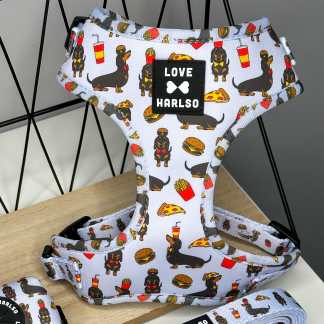
Product on saleAdjustable Harness – Fast FoodOriginal price was: £23.50.£11.75Current price is: £11.75.
-
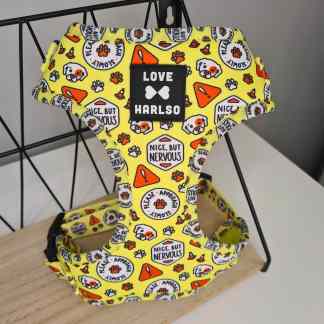
Product on saleAdjustable Harness – Nice But NervousOriginal price was: £23.50.£11.75Current price is: £11.75.
-
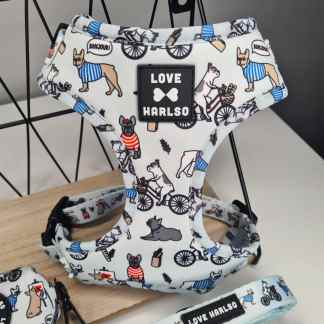
Product on saleAdjustable Harness – Excuse My FrenchOriginal price was: £23.50.£11.75Current price is: £11.75.
-
Product on saleAdjustable Harness – StarstruckOriginal price was: £23.50.£11.75Current price is: £11.75.
-
Product on saleAdjustable Harness – It’s A Dogs WorldOriginal price was: £23.50.£11.75Current price is: £11.75.
-
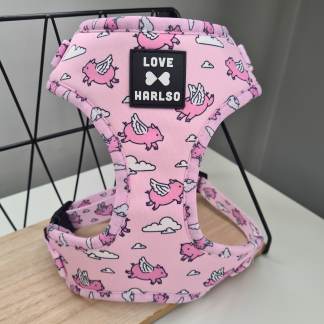
Product on saleAdjustable Harness – Pigs Might FlyOriginal price was: £23.50.£11.75Current price is: £11.75.
-
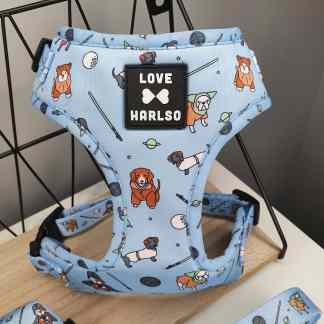
Product on saleAdjustable Harness – Galactic WoofersOriginal price was: £23.50.£11.75Current price is: £11.75.
-
Product on saleAdjustable Harness – Love HeartsOriginal price was: £23.50.£11.75Current price is: £11.75.