

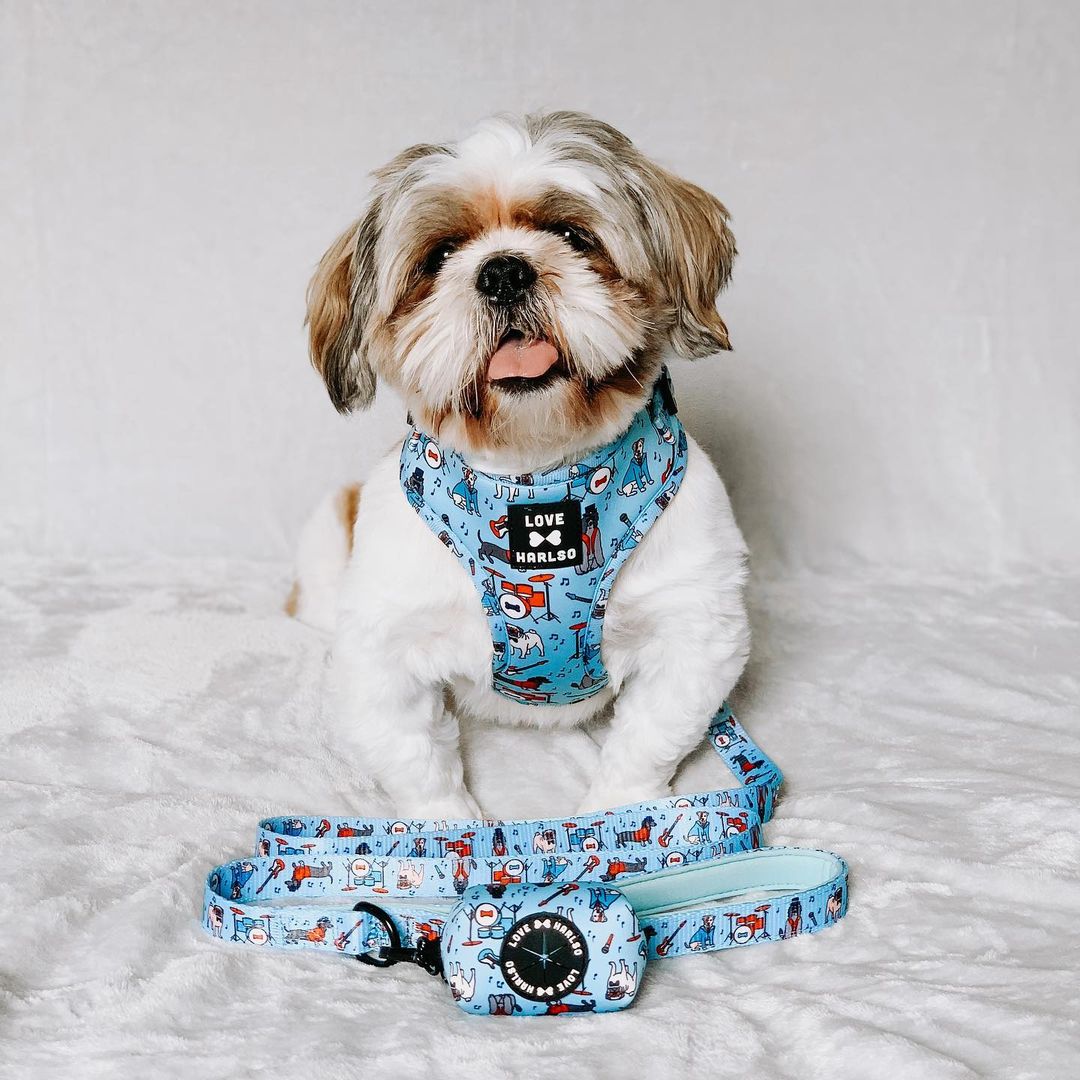
Dog harnesses are essential for comfortable, safe walks — and with so many types available, choosing the right one can feel overwhelming. This guide explains the main types of Love Harlso dog harness, from back-clip and front-clip to step-in, over-head, reflective and padded styles, and gives sizing tips to help you find the perfect fit for your dog.
Small dogs such as dachshunds and Chihuahuas need a lightweight harness with narrower straps that spreads pressure across the chest rather than the neck. Medium dogs such as Corgis and Beagles need a balance of support and comfort, while large dogs such as Golden Retrievers and German Shepherds need wider straps, sturdy buckles and, if they pull, a no-pull style. Love Harlso’s adjustable harnesses are made to suit each shape.
1. Back Clip Harness
Back clip harnesses are the most common type of dog harnesses. They feature a D-ring on the dog’s back, where you can attach the leash. Back clip harnesses are easy to use and control your dog well. They are suitable for small to medium sized dogs that do not pull excessively on the leash.
However, they are not recommended for large, strong dogs that tend to pull, as they can cause strain on the dog’s neck and spine.
2. Front Clip Harness
Front clip harnesses have a D-ring on the front of the dog’s chest. This design helps to discourage pulling by redirecting the dog’s attention towards you. Front clip harnesses are ideal for dogs that tend to pull on leashes and are suitable for all sizes of dogs.
They also provide better control over the dog’s movements, making them excellent for training and walking.
3. No Pull Harness
No pull harnesses are designed to prevent dogs from pulling on the leash. They feature a front and back clip, allowing more control over the dog’s movements. No pull harnesses are ideal for large and strong dogs that tend to pull on the leash.
They are also suitable for dogs that tend to escape from their harnesses. However, they can be more challenging to put on and take off than other harnesses. Other useful styles include: Standard harnesses — a strap around the chest and one across the back, joined at the shoulders, spreading pressure evenly and suiting dogs that pull. Step-in harnesses — your dog steps into two leg holes and the harness clips at the top of the back, ideal if they dislike things going over their head or have a neck injury. Head harnesses — also called head collars, these fit over the head and turn the dog towards you when they pull; they suit strong pullers but take getting used to. Over-head harnesses — slipped on from above, covering more surface area for extra support, helpful for long-bodied breeds such as dachshunds. Reflective and LED harnesses — reflective strips or lights keep your dog visible on early morning and evening walks. Padded harnesses — extra padding protects sensitive skin and dogs with little body fat from chafing. Materials matter too: nylon and polyester are durable, weather-resistant and easy to clean.
Sizing Tips for Dog Harnesses
Choosing the right dog harness size is crucial for your dog’s comfort and safety. Too tight harnesses can cause discomfort and restrict the dog’s movement, while an excessively-loose harness can slip off or cause chafing. Here are some sizing tips to help you find the ideal fit for your furry companion.
1. Measure your Dog’s Girth
The girth is the widest part of your dog’s ribcage, just behind the front legs. Use a measuring tape to measure your dog’s girth, and add two inches to the measurement to ensure a comfortable fit. Most harnesses have sizing charts to help you find the right size based on your dog’s girth measurement.
2. Check the Harness’s Adjustability
Most harnesses come with adjustable straps that allow you to customize the fit to your dog’s body. Check the harness’s adjustability before purchasing to make sure that you can make the necessary adjustments to fit your dog’s body shape.
3. Consider Your Dog’s Breed and Body Type
Different breeds and body types require different types of harnesses. For example, small dogs with delicate necks, such as dachshunds, may benefit from a harness that distributes pressure evenly across the chest. On the other hand, large and muscular dogs may require a harness that offers more control over their movements. Consider your dog’s breed and body type when choosing a harness, and check the Love Harlso sizing guide to match your dog’s measurements to the right size.
Final Thoughts
Dog harnesses are essential for pet owners who want to provide comfort and safety for their furry friends during walks and outdoor activities. Choosing the right type and size of harness is crucial for your dog’s comfort and safety.
Frequently asked questions — Which harness is best for a dog that pulls? A front-clip or no-pull harness, which redirects your dog towards you instead of pulling on the neck. Which harness is best for a dachshund? A lightweight, well-padded step-in or over-head harness with narrow straps that suits a long body and spreads pressure across the chest. How do I measure my dog for a harness? Measure the girth just behind the front legs, add two inches, and check the Love Harlso sizing guide — then adjust the straps so two fingers fit between harness and fur.
Get your furry friend the perfect fit and comfort with Love Harlso’s high-quality dog harnesses. Shop now and ensure your dog’s safety during walks and outdoor activities. Choose Love Harlso, your trusted source for all your dog harness needs.
