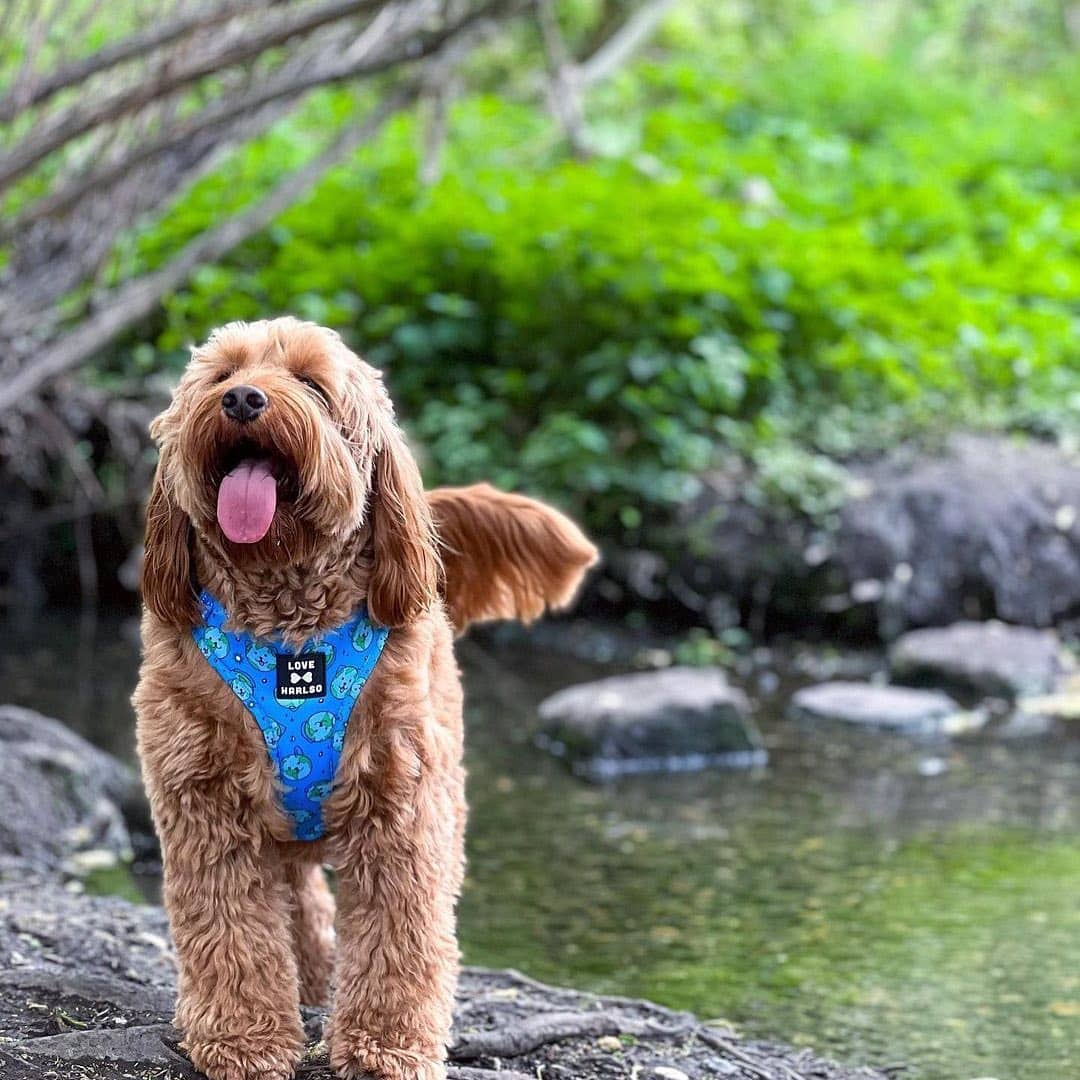


Yes — a puppy harness should fit snugly enough to stay in place, but loosely enough for you to slip two fingers flat between the harness and your puppy’s body. If it slides around, twists, or leaves marks, it is too loose or too tight. Puppies grow fast, so choose an adjustable harness and re-check the fit every couple of weeks.
A good fit matters more for a puppy than for an adult dog. A harness that is too tight can rub, restrict movement and make walks stressful, while one that is too loose can slip off or let a wriggly puppy escape. The right harness spreads pressure across the chest rather than the neck, which is especially important for small breeds and dachshunds, whose long backs and delicate necks need gentle, even support.
How to measure your puppy for a harness
Measure before you order, and measure again as your puppy grows. You need two measurements: the chest (around the widest part of the ribcage, just behind the front legs) and the neck (around the base of the neck, where a collar would sit). Keep the tape snug but not tight, and take each measurement twice. Then compare your puppy’s measurements with the Love Harlso sizing guide and, if your puppy is between sizes, choose the larger size so the harness can be adjusted down.
Choosing a harness for a growing puppy
Look for these features when you choose a puppy harness:
- Adjustable straps at the neck and chest, so the harness can grow with your puppy for longer.
- A step-in or easy-on design, which is often calmer for puppies who wriggle when you put a harness over their head.
- Soft, lightweight fabric that will not rub or weigh a small puppy down.
- A secure clip and a sturdy D-ring for attaching a lead.
- A snug, even fit with no gaps at the chest and no pressure on the throat.
For dachshund puppies in particular, check the length as well as the girth: a harness that is too long can sit too far back, while one that is too short can pull across the shoulders. If you are unsure, the sizing guide is the best place to start.
How to fit a puppy harness, step by step
- Loosen all the straps, then help your puppy step into the harness or slip it gently over their head.
- Fasten the clip and position the harness so it sits flat across the chest, with the D-ring on top.
- Tighten the neck strap first, then the chest strap, until the harness is snug but comfortable.
- Do the two-finger check: slide two fingers flat under each strap. If you cannot fit them in, loosen the strap. If you can fit in more than two fingers, tighten it.
- Watch your puppy walk, sit and lie down. The harness should stay in place without riding up, twisting or rubbing under the front legs.
- Attach the lead and take a short, calm walk indoors first, so your puppy gets used to the feel of it.
How often should you check the fit?
Check the fit every two to three weeks while your puppy is growing quickly, and always after a growth spurt. Look for redness, flattened fur or sore spots under the straps, and for a harness that suddenly seems tight or hard to fasten. Most puppies will need a larger size at least once before they reach their adult size — that is normal, and it is better to size up early than to keep a puppy in a harness they have outgrown. Once your puppy is settled in a well-fitting harness, you can start harness training with short, positive sessions and plenty of treats.
Common puppy harness fitting mistakes
- Buying for the adult size: a harness that is far too big will slip, twist and teach your puppy that harnesses are uncomfortable. Buy for now, with room to adjust.
- Guessing the size: breeds vary a lot, even within the same age. Always measure rather than guessing from age or weight alone.
- Leaving it too tight: if your puppy freezes, chews at the harness or refuses to walk, check the fit before assuming it is a training problem.
- Forgetting to re-check: a harness that fitted perfectly a month ago may be too small now.
Frequently asked questions
How tight should a puppy harness be?
Snug enough to stay in place, with room for two fingers flat under each strap. It should not leave marks, rub the skin, or slide from side to side.
When can a puppy start wearing a harness?
Most puppies can start wearing a lightweight harness for short, supervised periods once they are settled at home. Keep first sessions short and positive, and pair the harness with treats and play. If you are unsure, ask your vet.
How do I know when my puppy has outgrown their harness?
It is time to size up if the straps are at their loosest setting, the harness leaves marks, your puppy seems uncomfortable, or you can no longer fit two fingers under the straps. Re-measure and check the sizing guide.
Ready to find the right fit? Browse the Love Harlso harness collection and, before your puppy’s first walk in their new harness, read how to prepare your dog for their first Love Harlso harness and how to tell if a harness fits properly.